- The James Journal
- Posts
- Channelling Madness
Channelling Madness
Why people pleasers must embrace their inner wildness

Jumi James
July 07, 2025

In my early years of boarding school, I'd only heard whispers of it. "Five-minute madness", they called it. It was a split-second rupture in the social order when a junior girl would snap and have a fearless showdown with a senior bully.
The older girls spoke of it as if they had witnessed a lightning strike. Most of us believed it was just a story, a legend passed down to give us false hope that someone, somewhere, had found the courage to fight back. Until the day I watched it happen to Little A.
She was a mouse of a girl who didn’t like to draw attention to herself. We'd bonded over our shared love of silence. As a teenager with a rich inner world, I found the constant chattering of others unbearable. Little A let me drift into my daydreams without demanding conversation or interaction. That alone made her precious to me.
That's why what happened felt like watching someone I loved transform into a stranger. The senior, let's call her The Terror, had perfected the art of breaking spirits with just five words: "Woe betide your soul, don't..." That phrase made knees buckle and hands shake. “Woe betide your soul, don't get that bucket of water for my shower on time…”. “Woe betide your soul, don't have my bed space swept before I get back.”
We all knew the drill. You heard those words, your stomach plunged, and you scattered like roaches when the lights came on. This is because everyone knew The Terror's favourite punishment tool: a wire clothes hanger that left welts on your back for days.
On that fateful afternoon, something awe-inspiring happened. The Terror stood there, towering over Little A, delivering her usual poison: "Woe betide your soul, you don't get 5 buckets of water here in the next…" She never finished the sentence. Little A exploded. She detonated like a bomb that had been ticking in silence for months.
She shot to her feet and unleashed a sound I'd never heard from her throat, a roar that seemed to come from somewhere primal and untamed. "NO!" Tears started to stream down her face. Her fists trembled with rage and her chest heaved like she was fighting for her life. Her eyes, good gracious, her eyes blazed with something that looked like beautiful, terrifying madness.
For the first time in three years, I saw The Terror's eyes flash with something I'd never seen there before: fear. And in that moment, I wasn't afraid of The Terror. I was afraid of the magnificent, unhinged fury I saw blazing in my quiet friend's eyes. Wild, and absolutely, terrifyingly alive.
And I found myself hoping I'd witness it again. That image has haunted me for years. Little A standing there, transformed by her unleashed fury, teaching a room full of cowering girls that we didn't have to accept what felt unacceptable. It revealed something that had always been true: sometimes, rupture is survival.
This letter was born from that memory.
The agenda
The problem of being predictable
Channelling your suppressed rage without destroying yourself
Strategic elements of controlled madness
This journal will have achieved what I hope for if, one day, instead of folding into the familiar chokehold of niceness, you pause and think, “Nope. Not today. Miss me with that nonsense.”
“To be ourselves causes us to be exiled by many others, and yet to comply with what others want causes us to be exiled from ourselves.”
When crazy is the sanest strategy
Don’t let anybody tell you madness doesn’t have its uses. Sometimes, all it takes is one moment of madness to change it all. One uncharacteristic rupture in the carefully maintained performance of being easy to love, easy to manage, and easy to control.
It appears as madness because it defies the social order you were raised to uphold, which is conflict avoidance, compliance, and being liked at all costs.
For a people pleaser, this moment can feel dangerous, like setting fire to the only bridge you know how to walk. But sometimes, that fire is the only way out of the cages. In that rupture is liberation, where, for once, you didn’t abandon yourself to keep the peace.
The problem of being predictable
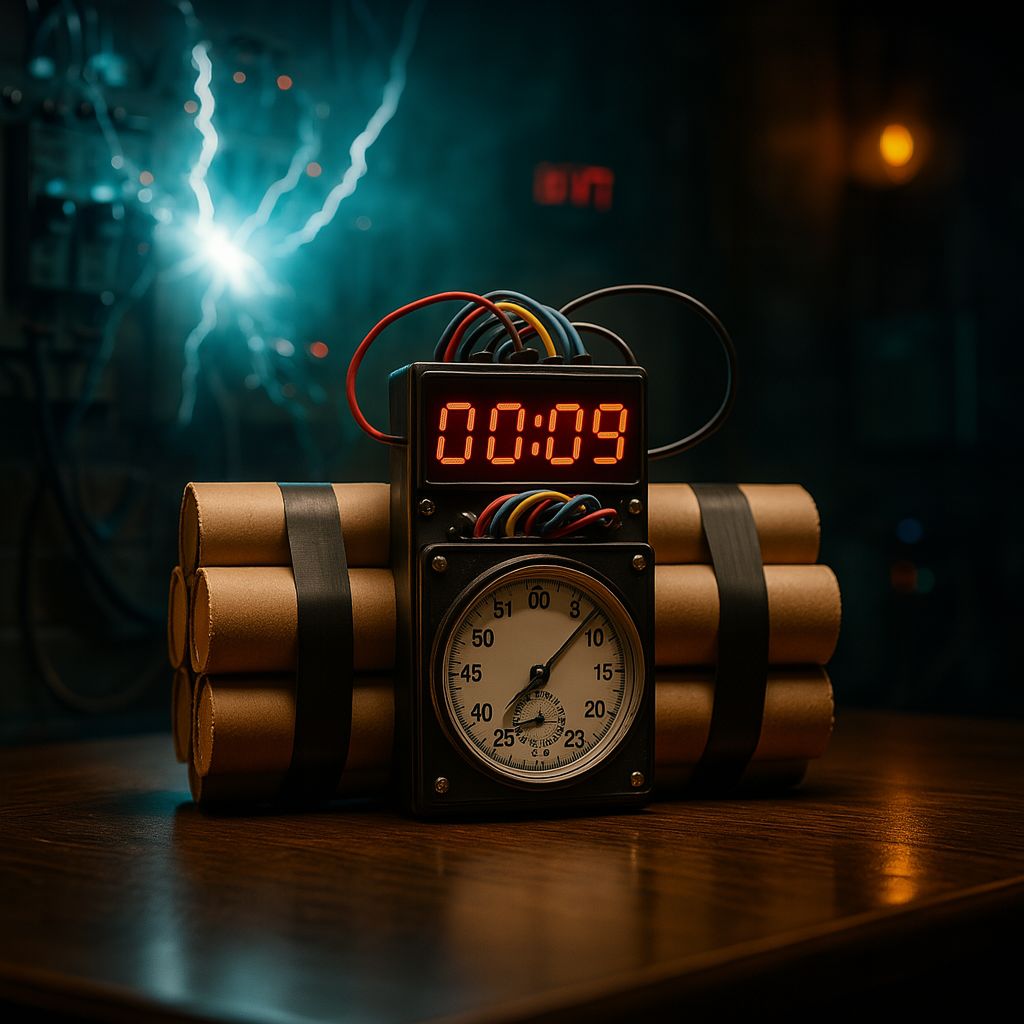
Predictability feels safe. Until it becomes the script that traps you. When you always respond with grace, always smooth things over, and always take the blame, people stop seeing you as a person and start treating you like customer service.
Your reactions become so rehearsed that others calculate against them. They know you won't speak up. They know you will apologise first. They know you will say yes. So they start pushing and crossing lines, testing your limits, making demands because they are not expecting any resistance from you.
This reliable predictability becomes their tool. And over time, you are not just predictable, you become controllable.
While writing this letter, I came across Daniel Ellsberg and how he explored the power of appearing irrational in game theory and conflict situations. His work suggests that sometimes the most rational strategy is to appear completely irrational to your opponents.
His theories reveal profound insights about power dynamics that apply far beyond economics or military strategy. What you will discover is that those who seem most unpredictable often hold the most power in any relationship or system.
The question becomes: How do you harness this principle without losing yourself in the process?
Channel your suppressed rage without destroying yourself

What most people don't understand about suppressed rage is that it is not anger at specific people or situations. It's anger at yourself for betraying yourself repeatedly.
Little A's explosion wasn't really about The Terror. It was about years of accumulated self-betrayal finally refusing to be contained. The rage had been building not from external injustices alone but from the deeper wound of becoming invisible in her own story.
Now, the goal isn't to become a destructive force but to reclaim the energy you've been using to suppress your authentic responses and redirect it toward protecting your boundaries.
I will leave you with this: be unpredictable with your exploiters (people who've learned to exploit your predictability) and consistent with your supporters.
"What if I go too far and become selfish/cruel/impossible?"
A people pleaser asking this question is like an anorexic worried about getting fat after eating a sandwich. Your default setting is so far toward self-denial that you'd have to swing pretty hard in the other direction to even reach the middle. Trust yourself to find balance as you go.
Some strategic elements of controlled madness
“When the drumbeat changes, the dance must change too.”
Rosa Parks wasn't planning to change history on December 1st, 1955. She was simply tired of being reasonable with unreasonable people. When the bus driver demanded she give up her seat, something in her said, "No."
It looked like madness to everyone at the time. However, that moment of "controlled madness" where she chose authenticity over safety and dignity over approval sparked a movement that changed America.
Rosa Parks understood what every people pleaser needs to learn which is that saying 'no' to the wrong things is how you say 'yes' to your dignity.
Here are some strategic elements of controlled madness that can help you reclaim yourself.
Element | Purpose | Practice |
|---|---|---|
Silence when speech is expected | Forces others to fill the void instead of you always doing it | In conversations/meetings: say less, observe more |
Sudden rule-breaking | Disrupts social hierarchy assumptions | Break a routine that others use to take advantage of you |
Unusual behaviour in ritual space | Shows you are comfortable being misunderstood rather than diminished | Deliberately break your 'nice person' pattern in moments that matter |
Unexpected refusal | Creates friction that makes people consider your needs instead of ignoring them | Say “no” in a context where you would usually say “yes” |
Strategic retreat | Makes others realize they need to treat you better | End your participation in toxic situations way before you used to |
These five elements require doing what terrifies people-pleasers most: disappointing someone in the moment to honour yourself in the long run. It will feel uncomfortable at first. You will feel "mean" but I guarantee you will get your life back.
Little A never went back to being the mouse she was before that day. Something fundamental had awakened in not just how others saw her, but in how she carried herself through the world.
There was a twinkle in her eye that ever since made bullies give her a wide berth. It was a knowing glint that warned you never quite knew what might happen if you pushed too far.
That’s the gift of channelling controlled madness.
Talk soon,
Jumi.
Download the free Energy Vampire Tool Kit. Come find me on Twitter.