- The James Journal
- Posts
- A Time to Hate
A Time to Hate
Reclaiming the emotion that liberates you from self-betrayal

Jumi James
June 23, 2025

I didn’t set out to write about hate. If anything, I’ve always avoided the word. It felt too sharp and final. It felt like something I wasn’t supposed to feel, but pray away. I grew up believing that love was holy, but hate was dangerous so I did what many would do: I swallowed it. I made peace with things that should have been burned to the ground. But the more I pushed hate away, the more I turned it inward. I wasn’t truly forgiving. Instead, I was abandoning everything I stood for. I thought it was “grace”, but when I dug deeper and got more honest with myself, I realised I was actually afraid of being seen as not nice. This fear tainted my discernment, my clarity and my convictions. Was it really grace if it was rooted in appeasement? If it asked me to lie about what wounded me just to keep the peace? Getting clear on this has helped me reclaim the voice I buried beneath politeness. A healthy relationship with myself and with others demands that I draw a hard line between what is acceptable and what is not. This isn’t about rage. It is about reverence and the reclamation of the right to one word: hate.
“It is no measure of health to be well adjusted to a profoundly sick society.”
The demonisation of hate
I am well aware that this word has bad PR.
In today’s world, “hate” is almost always used in the context of harm. Hate speech. Hate crimes. Hate groups. The word immediately conjures images of violence, extremism and bigotry. It’s been welded to destruction, and for good reason: in the hands of the unaccountable, hate can indeed become a weapon.
But somewhere along the line, we began to fear the word itself, not just what people did in its name. And in that fear, we stripped it of all nuance. We forgot that “hate” was not exclusively destructive because it once had a broader, more neutral usage, simply meaning to strongly reject, to turn away from, to detest something as misaligned or wrong. You can find this even in the earliest Biblical texts. “Hate what is evil; cling to what is good.” “The Lord hates dishonest scales.” In these sacred contexts, hate isn’t a violent impulse. It’s discernment. It’s a force of separation between what is good and what is corrupt. It was not for personal vendetta, but a moral delineation.
When you exile hatred from your emotional vocabulary, you also exile its wisdom because it’s that part of you that says:
“I will not accept this.”
“I am not okay with this.”
“This ends here.”
If you’ve been raised in high-control environments and wrapped in survival-dependent family roles, you won’t know the difference between destructive hatred and clarifying hatred. What then happens is that you begin to repress and internalise it. You turn it inward, and it becomes a slow-rotting flame that erodes you from within because it has not been allowed to guard and guide.
The poison of suppressed hate
People often think that suppressing hatred automatically makes you more loving. You think that if you are calm enough, nice enough, understanding enough, eventually the fire will go out on its own. But it doesn’t. A person who hasn’t processed their hatred isn’t more loving but more divided and performative.
You’ve seen this before, perhaps a person you respect who speaks of love and light, but you know there is just something off about them, a misalignment between what they speak with their lips and the underlying heated vibes you get from them. You can’t put your finger on it, but it rubs you the wrong way. Or maybe it’s “mature” you, showing up for people who keep violating you and then lashing out at safe people later because you didn’t speak your truth to the unsafe ones.
Suppressed hatred doesn’t vanish. It becomes inflammation, burnout, and anxiety. It affects your sleep, gut and hormones. When your spirit doesn’t feel safe enough to say, “I hate this,” your body will start saying it for you through fatigue, tension, and dis-ease.
Suppressed hatred turns into:
1) Chronic self-sabotage (because if you can’t say no outwardly, you will destroy inwardly)
2) Resentment toward people who “get away” with what you can’t express because you are too “nice” to live the truth.
3) Passive-aggressive behaviour that you hide under spirituality or kindness
4) Silent bitterness that you hold in your body and energy, which contaminates your relationships (I am thinking about this saying, “if you don’t heal, you bleed on people who did not cut you”)
5) A fractured sense of identity because you didn’t give yourself permission to hate what violates your design.
6) Self-hatred because all the refusal, anger and rejection you feel haven’t been acknowledged and have nowhere to go but inwards.
7) Being easily manipulated because you are emotionally foggy and you don’t acknowledge your reactions (too busy trying to be nice to be mad)
You don’t have to rage or explode. But you do need to live your truth. Your unspoken hatred doesn’t make you righteous. It just makes you dishonest with others, and eventually, with yourself. And what you cannot hate clearly, you will eventually resent quietly.
Anchoring love and hate
“A time to love and a time to hate.”
When you finally allow yourself to hate the manipulation, you discover how much you love authenticity. When you hate the disrespect, you realise how deeply you value honour. When you hate the emotional games, you see how much you treasure direct, honest communication.
What you hate is not separate from what you love. It's the shadow that gives your love definition, the boundary that gives your affection meaning. Treat it as such.
Maybe you are reading this thinking, "This doesn't apply to me. I don't hate anyone or anything."
Do you find yourself saying "yes" when everything in you is screaming "no"? Do you find yourself over-explaining your boundaries to people who clearly don't respect them? Do you ever lie awake replaying conversations, thinking of all the things you should have said? Do you find yourself making excuses for people's bad behaviour toward you?
That's not the absence of hate but hate turned inward. The chronic exhaustion you feel isn't from loving too much, but from hating and refusing to honour that hatred with the right decision.

Honour your duality.
How to hate well right
Acknowledge what you hate:
Start by identifying the things that trigger your anger or disdain, the people, behaviours, and situations that stir up your inner “lion.” Acknowledge that it’s not wrong to feel this way; it’s part of your emotional intelligence. The discomfort is a key to your liberation.
Identify Behaviours, Not People:
When you begin to unravel the layers of your resentment, don’t target people. Instead, focus on the behaviours you hate. Be clear about the exact actions or patterns that upset you. That’s where your energy belongs, on the actions, not the individuals. The benefit of this is that you learn to distance the person from the behaviour, both in others and in yourself. This prevents you from collapsing someone’s identity into their worst actions. It prevents you from collapsing your whole identity into your moments of weakness/mistakes. You will stop seeing people/yourself as “bad” and start seeing patterns that need boundaries. In short, it protects you from contempt toward others and toward yourself, and gives you a compassionate way to identify what’s not okay.
Set Intentions with Your Hatred:
Channel the energy of your hate into something purposeful. What does your hatred tell you about what you desire? For example, if you hate being disrespected, the goal becomes mutual respect. If you hate dishonesty, the goal becomes clarity and truth. Align your hatred with a positive intention.
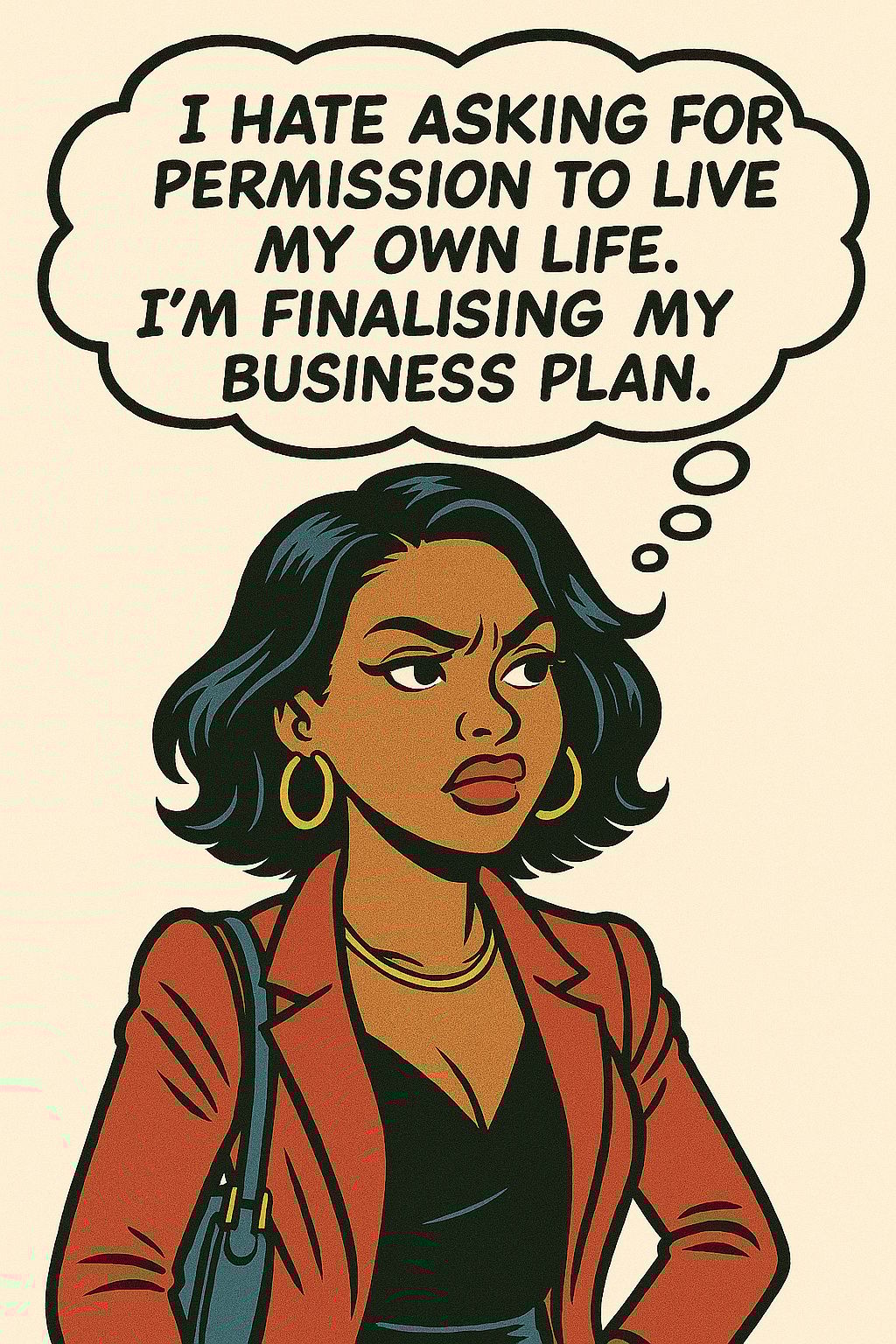
Enforce Boundaries Ruthlessly:
Once you have identified and labelled what you hate, defend against it fiercely. Use your boundaries as your sword to stand firm, unapologetically. This is not about controlling others but setting clear limits around what you will accept in your life.
Understand that both the dark (the lion that asserts boundaries, sets standards, and says “no”) and the light (the lamb that nurtures and forgives) have been intentionally placed in you. Splitting one off for the other is entirely against your design and creates dis-ease within you.
The benefits of honouring the love and hate duality
1. Instant Pattern Recognition
You start to see the pattern before the betrayal. You spot nonsense quickly, in yourself and others. You spot manipulation in its Sunday best. If you are intentional about your hatred of flakiness, you won’t respond to people who ghost you and pop up again like it’s nothing. You will avoid being a flaky person yourself.
2. Freedom from People-Pleasing Addictions
When you reclaim your right to hate, you stop performing for love, and you stop sacrificing your peace for approval. You stop shapeshifting and twisting yourself out for crumbs of affection.
3. Emotional Sovereignty
You will no longer depend on others to "treat you right" to feel peace. You become your own fierce protector. You will have certain emotional creeds and live by them regardless of who or what is around you. Elevated living.
I love the duality of love and hate. It’s like an injection of integrity shooting up your spine. I intensely hate behaviour X. Because I hate behaviour X, I will not tolerate it. I will also not act out behaviour X on others. I forbid behaviour X to be done to me or through me. Give me a better definition of self-honour and love.
The Holy Grail of Self-Respect
The ultimate paradox is that you will never fully gain self-respect until you know what you hate, because self-respect is built on clear self-definition. Without acknowledging what you hate, how can you really know who you are? Self-respect doesn't grow in the absence of hate. It grows when you are willing to burn away the things that are not worthy of you. It means you are no longer willing to accept what is beneath your dignity. It's a weapon for self-honouring, cutting through guilt and shame like a sword, allowing you to decide what you will and will not tolerate in your life. Being able to hate what doesn't serve you is a sign of personal evolution. It is a necessary fire in your life, forged through rejecting what is disrespectful to you.
This content is about reclaiming healthy discernment and boundary-setting, not promoting hatred toward people groups, violence, or cruelty. The distinction between righteous hatred (of harmful behaviours/patterns) and destructive hatred (of people/groups) is crucial and should always be maintained.
I’ve got a new tool on the way, and it was born straight out of this letter. Nobody’s Doormat is a practical workbook designed to help you expose the patterns you need to hate and teach you exactly how to deal with them. It’s fierce, useful, and laced with simulations to sharpen your self-respect. Don’t pretend you are not curious. Subscribe to The James Journal to make sure you don’t miss the release. Download the free Energy Vampire Toolkit here. Come find me on Twitter.